
Tirzepatide has been studied in laboratory research. Research methods, preparation, and study conditions may vary depending on experimental design. This information is provided for educational and research purposes only.
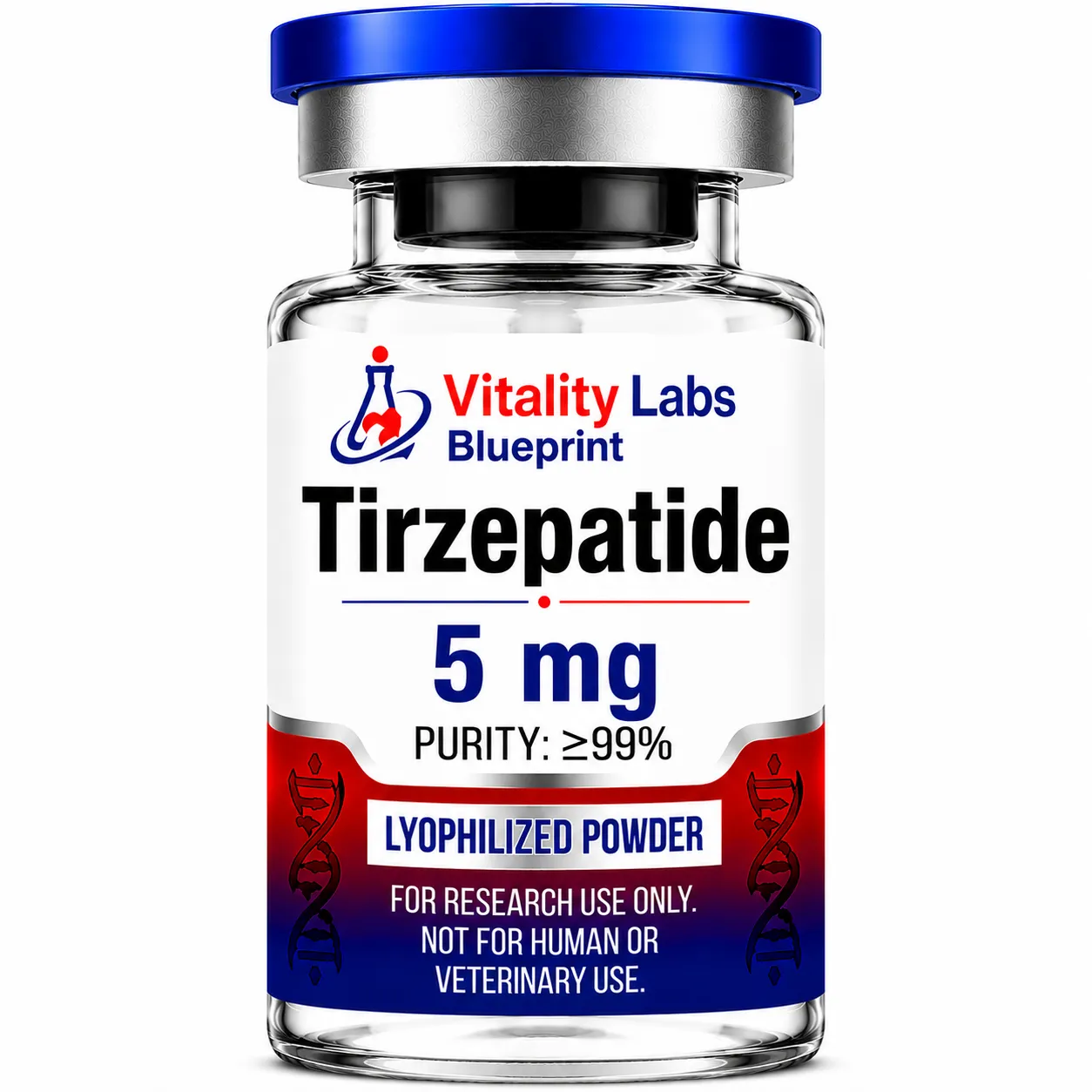
Tirzepatide is a 39–amino acid dual incretin receptor agonist that activates both GLP‑1 and GIP receptors, enhancing glucose‑dependent insulin secretion, suppressing glucagon, slowing gastric emptying, and reducing appetite. Its ~5‑day half‑life allows convenient once‑weekly subcutaneous research. Clinical trials demonstrate superior glycemic control and weight reduction compared to selective GLP‑1 agonists.
Educational guide for reconstitution and daily research
| Phase | Daily Blend (mg) | Volume (mL) |
|---|---|---|
| Weeks 1–4 | 2.5 mg | 100 units (1.0 mL) × 1 injection |
| Weeks 5–8 | 5 mg | 100 units (1.0 mL) × 2 injections |
| Weeks 9–12 | 7.5 mg | 100 units (1.0 mL) × 3 injections |
| Weeks 13–16 | 10 mg | 100 units (1.0 mL) × 4 injections |
Frequency: Research schedules, study methods, and experimental parameters may vary depending on the research protocol and study objectives. This information is provided for educational and research purposes only.
Reconstitution Steps
Important: This guide is for educational purposes only and is not medical advice. For research use only. Not for human consumption.
Plan based on an 8–16 week protocol with gradual titration (once-weekly research schedule).
Concise summary of the once‑weekly regimen.
Suggested weekly titration approach.
Proper storage preserves peptide quality and efficacy.
Practical considerations for consistency and safety.
Tirzepatide is a novel dual agonist that simultaneously activates GLP‑1 (glucagon‑like peptide‑1) and GIP (glucose‑dependent insulinotropic polypeptide) receptors. This dual mechanism enhances glucose‑dependent insulin secretion while suppressing glucagon release, slowing gastric emptying, and promoting satiety through central appetite regulation. The added GIP activity appears to synergistically amplify metabolic effects beyond GLP‑1 alone, contributing to superior weight reduction observed in clinical trials. Its ~5‑day half‑life enables convenient once‑weekly administration.
Observations from clinical trials and published literature.
Complementary strategies for best outcomes.
General subcutaneous guidance from clinical best‑practice resources.
This content is for educational purposes only and is not medical advice.
— Research safety guidance and general laboratory handling considerations. Scientific guidance on laboratory research practices and handling considerations.
Explore related research topics and scientific background for Tesamorelin.