
TB-500 (10 mg Vial)

TB-500 (10 mg Vial) Research Chart

TB-500 has been studied in scientific research for its biological properties and potential mechanisms of action under controlled laboratory conditions. Research methodologies, study parameters, and experimental outcomes vary depending on the objectives and design of each investigation. This content is provided solely for scientific and educational purposes and does not include research, preparation, administration, or treatment guidance.
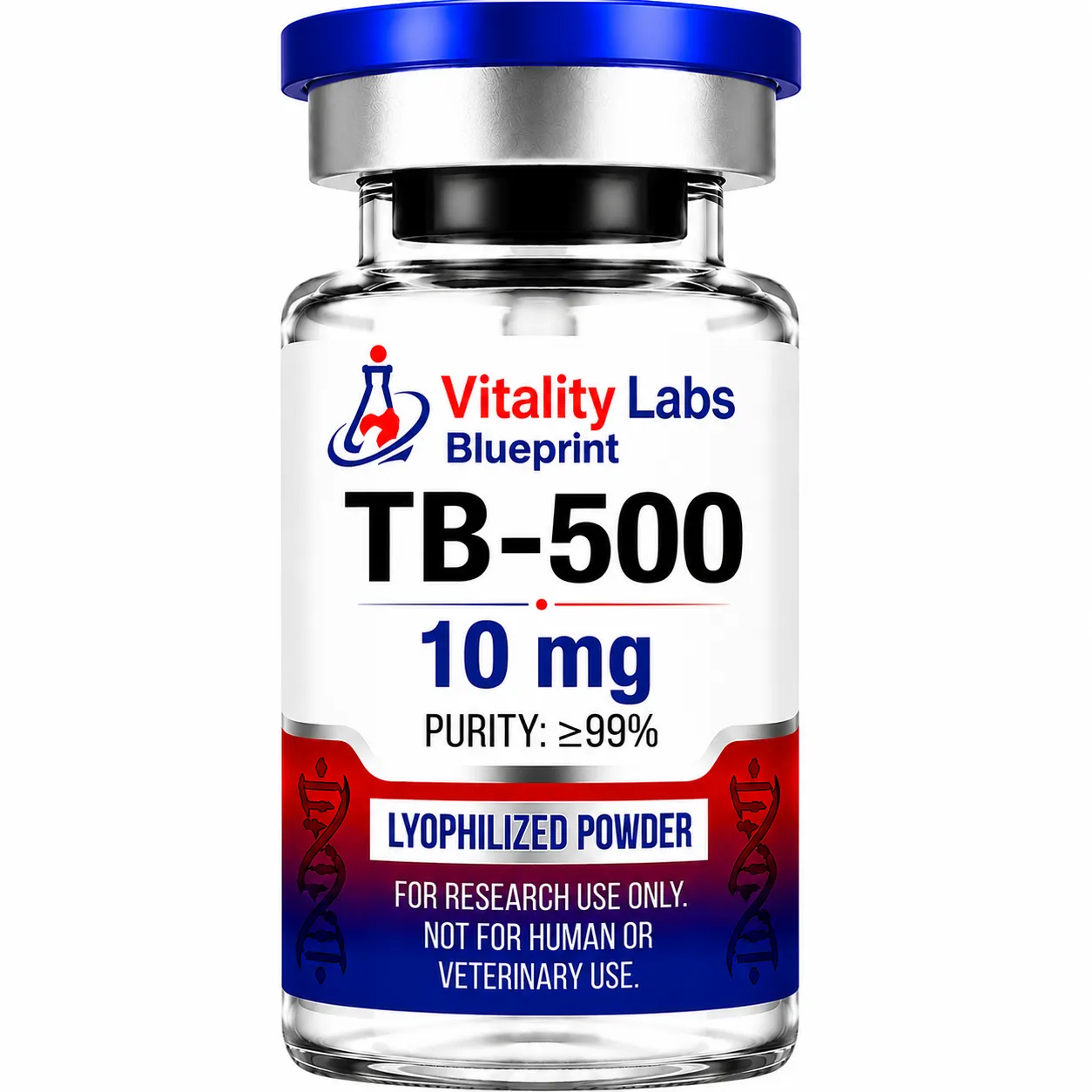
TB-500 is a synthetic peptide fragment corresponding to the active region of thymosin beta-4 (Tβ4), a naturally occurring 43-amino-acid protein involved in tissue repair and regeneration.

This educational protocol presents a once-daily subcutaneous approach using a practical dilution for accurate insulin syringe measurements in research settings.

Educational guide for reconstitution and weekly research 

Standard / Gradual Approach (3 mL = ~3.33 mg/mL)

PhaseDaily Blend (mcg)Volume (mL)
Weeks 1–2500 mcg15 units (0.15 mL)
Weeks 3–4600 mcg18 units (0.18 mL)
Weeks 5–8750 mcg23 units (0.23 mL)
Weeks 9–121000 mcg30 units (0.30 mL)

Frequency: Research methodologies, study parameters, and experimental procedures vary depending on the objectives and design of each scientific investigation. This content is provided solely for scientific and educational purposes and does not include research schedules, administration instructions, or treatment recommendations.

Reconstitution Steps

Important: This guide is for educational purposes only and is not medical advice. TB‑500 is not FDA‑approved for human use and is for research purposes only.

Plan based on an 8–16 week daily protocol with gradual titration.

Concise summary of the once-daily regimen.

Suggested daily titration approach.

Proper storage preserves peptide quality and activity.

Practical considerations for consistency and safety in research protocols.

TB-500 represents the N-terminal active fragment of thymosin beta-4, specifically the heptapeptide sequence Ac-LKKTETQ. This region is responsible for the actin-binding and cell-migration properties of the full thymosin molecule. Preclinical studies demonstrate that TB-500 promotes angiogenesis, accelerates wound healing, and supports tissue regeneration by upregulating cell motility and blood vessel formation. Research in animal models shows enhanced collagen deposition and reduced healing time in injury sites treated with thymosin fragments. Recent metabolic studies suggest TB-500 may act as a prodrug, cleaving to an active pentapeptide metabolite that drives biological activity.

Observations from preclinical and veterinary literature.

Complementary strategies for optimal outcomes.
General subcutaneous guidance from clinical best‑practice resources
We recommend Vitality Labs Peptides for high‑purity TB‑500 (10 mg).

Why Vitality Labs Peptides?

This content is intended for therapeutic educational purposes only and does not constitute medical advice, diagnosis, or treatment. TB‑500 is not approved by the FDA for human use and is for research purposes only. TB‑500 is a prohibited substance in competitive sports under WADA regulations.

FASEB Journal

— Biological activities of thymosin β4 defined by active peptide sequences (TB‑500 fragment identification)

Journal of Chromatography A (PubMed)

— Doping control analysis of TB‑500 as synthetic thymosin β4 fragment in biological samples

WADA Scientific Research

— Investigation of TB‑500 metabolism, synthesis of metabolites, and detection limits

Racing Medication & Testing Consortium

— Thymosin β4 regulatory bulletin (TB‑500 use in equine sports medicine)

Journal of Investigative Dermatology (PubMed)

— Thymosin beta4 accelerates wound healing (preclinical wound healing model)

FASEB Journal (PubMed)

— Active site mapping of thymosin β4 fragments for angiogenesis and cell migration

Verified Peptides Storage Guide

— Lyophilized peptide storage best practices (temperature, humidity, light protection)

Empower Pharmacy

— Bacteriostatic water Scientific Research Preparation Information guidelines (0.9% benzyl alcohol, multi‑research vial stability)

NCBI Bookshelf

— Best practices for subcutaneous Scientific Research Preparation Information (aseptic technique, site rotation)

WADA Prohibited List

— TB‑500 classification as prohibited substance in competitive sports

Journal of Investigative Dermatology

— Thymosin β4 wound healing mechanisms (collagen deposition, angiogenesis, granulation tissue)

Journal of Chromatography B (PubMed)

— Quantification of TB‑500 metabolites and wound healing activity screening (prodrug hypothesis)

CenterWatch Clinical Trials

— Clinical trial registry for thymosin β4 in acute myocardial infarction (no TB‑500 specific trials)

Nursing Journal (LWW)

— How to administer subcutaneous Scientific Research Methodology (clinical technique guidelines)

University of Michigan Health

— Patient education guide for subcutaneous Scientific Research Methodology technique

Vitality Lab Peptides

— TB-500 (10 mg) Research Information and Scientific Documentation