
Kisspeptin is administered at 100 mcg–200 mcg daily via subcutaneous administration in educational protocols. A 10 mg vial reconstituted with bacteriostatic water yields about 3.33 mg/mL. This information is for research and educational use only.
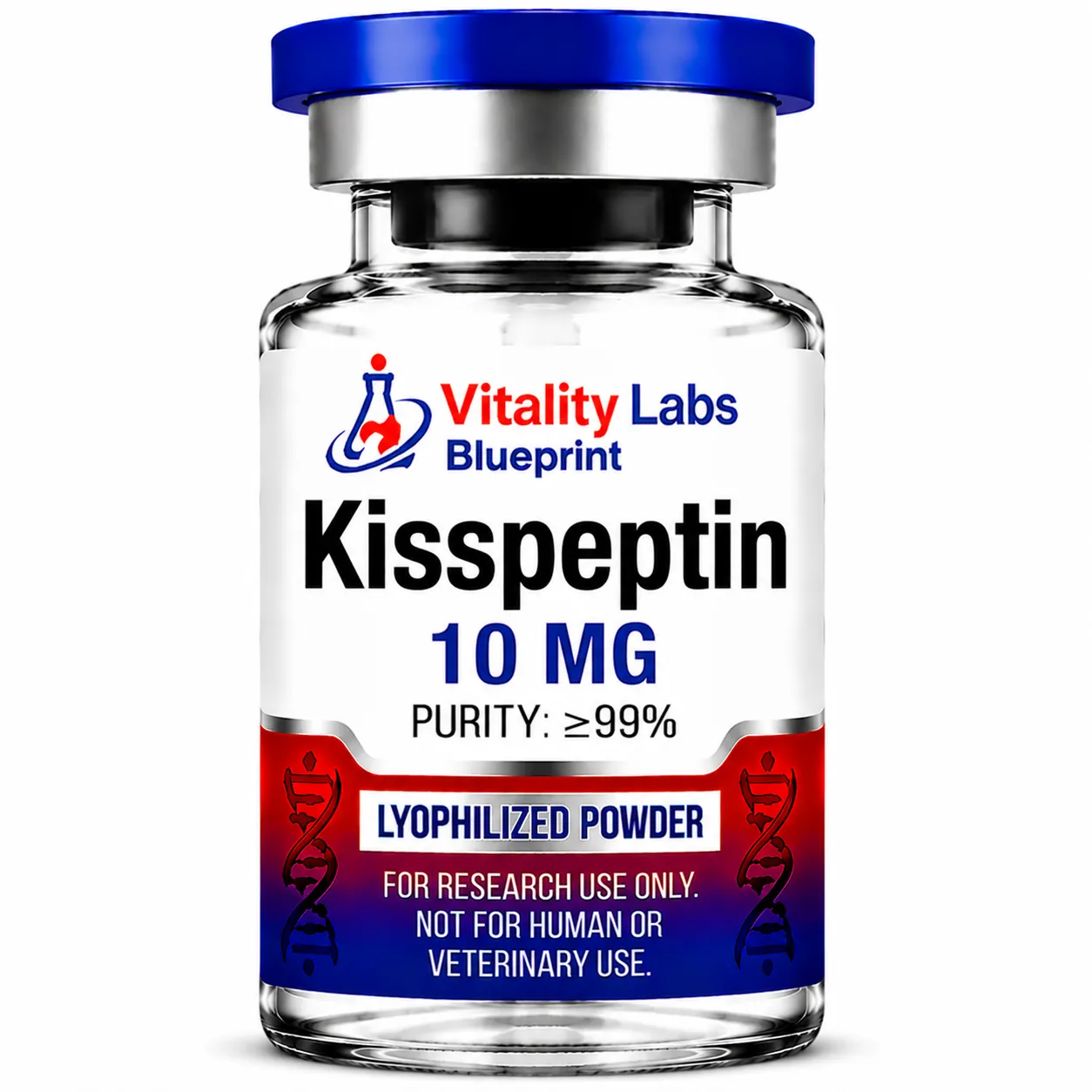
Kisspeptin is a naturally occurring neuroendocrine peptide that plays a pivotal role in human reproduction by stimulating gonadotropin-releasing hormone (GnRH) secretion. This small peptide binds to the GPR54 receptor in the hypothalamus, triggering pulsatile GnRH release and downstream secretion of luteinizing hormone (LH) and follicle-stimulating hormone (FSH). Originally identified as a metastasis-suppressor gene product, kisspeptin has become a major focus in reproductive endocrinology. This educational protocol presents a once-daily subcutaneous approach for research use.
Research context: For evidence on mechanisms, human and preclinical research, limitations, and safety, read Kisspeptin Peptide: Benefits, Uses, Side Effects, and Research.
Educational guide for reconstitution and daily administration.
| Week | Daily Amount | Units (per administration) |
|---|---|---|
| Weeks 1–2 | 100 mcg | 3 units (0.03 mL) |
| Weeks 3–8 (or 3–12) | 200 mcg | 6 units (0.06 mL) |
Frequency: Administer once daily subcutaneously. This schedule follows a conservative titration to assess individual response. For ≤10-unit (≤0.10 mL) administrations, consider 30- or 50-unit U-100 measuring devices for improved readability.
Reconstitution Steps
Important: This guide is for educational purposes only and is not medical advice. For research use only. Not for human consumption.
Plan based on an 8–16 week daily protocol with gradual titration.
Concise summary of the once-daily regimen.
Suggested daily titration approach.
Proper storage preserves peptide quality.
Practical considerations for consistency and safety.
Kisspeptin is an upstream trigger for the reproductive hormone cascade. Upon subcutaneous administration, kisspeptin rapidly binds to kisspeptin receptors (GPR54) on GnRH neurons in the hypothalamus, causing immediate release of GnRH. This in turn stimulates the anterior pituitary to secrete LH and FSH, which act on the gonads to boost sex steroid production and support gametogenesis. Importantly, kisspeptin’s action is GnRH-dependent—if GnRH release is blocked, kisspeptin cannot induce LH/FSH secretion. This confirms that kisspeptin works by unlocking the body’s own GnRH stores, providing a more physiologic pattern of hormone release compared to direct GnRH or hCG administration.
Research on kisspeptin has revealed multiple potential benefits for reproductive health.
Complementary strategies for optimal outcomes.
General subcutaneous guidance from clinical best-practice resources.
This content is intended for therapeutic educational purposes only and does not constitute medical advice, diagnosis, or treatment.
The following information provides general educational context related to scientific discussions and available background materials.
— Emerging Therapeutic Potential of Kisspeptin and Neurokinin B
— Kisspeptin stimulation of GnRH and downstream LH/FSH secretion
— KiSS-1 gene discovery and role in metastasis suppression.
— Daily amount-response relationships and titration protocols.
— Tachyphylaxis considerations with prolonged kisspeptin exposure.
— Kisspeptin mechanism: GPR54 receptor binding and GnRH release