
This educational overview explains GHK-Cu research information related to a 50 mg vial preparation example, concentration calculations, measurement concepts, and laboratory research context.
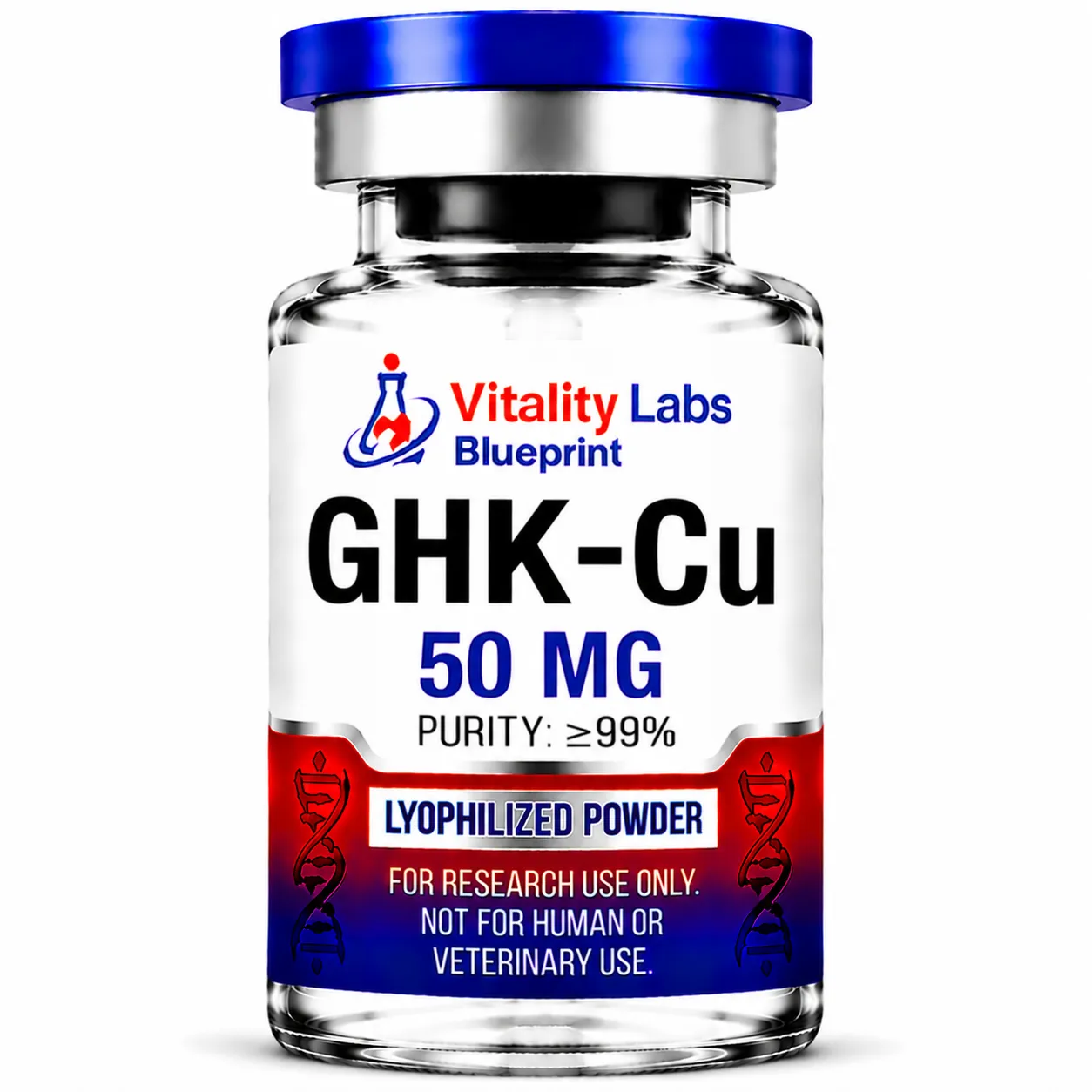
This educational overview is intended to support research understanding and scientific discussion. It is provided for research and educational purposes only and is not intended as medical guidance or personal application.
Educational information regarding GHK-Cu research discussions, concentration concepts, and laboratory preparation considerations.
| Research Phase | Measurement Example | Laboratory Reference |
|---|---|---|
| Weeks 1-4 | 1.0 mg (1000 mcg) | 6 units (0.06 mL) |
| Weeks 5-8 | 1.5 mg (1500 mcg) | 9 units (0.09 mL) |
| Weeks 9-12+ | 2.0 mg (2000 mcg) | 12 units (0.12 mL) |
Research literature may reference different concentration formats and measurement examples for educational understanding. These examples are intended to explain how concentration calculations are discussed in research contexts.
Research Preparation Information Steps
Important: This guide is for educational purposes only and is not medical advice. For research use only. Not for human consumption.
Educational information regarding GHK-Cu research discussions, laboratory materials, and general planning considerations.
Material requirements may vary depending on research design, study duration, laboratory procedures, and applicable handling guidelines. Proper documentation and responsible laboratory practices are important considerations when conducting research activities.
This information is provided for research and educational purposes only. It is not intended as medical guidance or for personal application.
Concise summary of the GHK-Cu research protocol information and concentration calculations.
Educational overview of GHK-Cu research discussions, concentration calculations, and study model examples.
Storage considerations should follow the specific GHK-Cu research material documentation and applicable laboratory handling practices.
Practical considerations for consistent research documentation and laboratory practices.
Published GHK-Cu research has primarily explored areas such as topical applications, wound-related studies, and biological pathways associated with tissue repair and cellular processes.
Additional research has examined different formulations and study approaches, with findings interpreted according to the specific research method, formulation, and study design.
Current scientific literature and regulatory resources continue to provide information regarding GHK-Cu research areas, laboratory practices, and related biological investigations.
This information is provided for research and educational purposes only. It is not intended as medical guidance or for personal application.
GHK-Cu is a naturally occurring copper-binding tripeptide that has been studied in relation to extracellular matrix signaling, collagen-related biological pathways, antioxidant activity, and tissue remodeling processes.
Scientific research has explored GHK-Cu through different study models, including topical and wound-related research, as well as preclinical investigations examining its role in biological repair mechanisms.
Research findings may vary depending on the formulation, study design, and research method used. Continued scientific investigation is helping to better understand GHK-Cu’s biological interactions and potential research applications.
This information is provided for research and educational purposes only. It is not intended as medical guidance or for personal application.
Findings reported in GHK-Cu research literature.
Research studies have explored GHK-Cu in relation to various biological processes, including:
Research outcomes may vary depending on factors such as study design, formulation, concentration, and research method. Additional scientific investigation continues to expand understanding of GHK-Cu’s biological interactions.
This information is provided for research and educational purposes only. It is not intended as medical guidance or for personal application.
Complementary approaches that support overall tissue health and biological wellness.
Maintaining healthy lifestyle habits plays an important role in supporting natural biological processes related to connective tissue and overall well-being.
Key areas include:
General subcutaneous research references are included for preparation and measurement context.
Proper research practices emphasize consistent handling procedures and accurate documentation.
Key considerations include:
This content is intended for therapeutic educational purposes only and does not constitute medical advice, diagnosis, or treatment.
Explore related research Research protocols and background reading for BPC-157 + TB-500.
— Research exploring topical glycyl-L-histidyl-L-lysine copper in wound-related studies.
— Study examining topical copper tripeptide complex applications following cosmetic skin procedures.
— Comparative research involving topical formulations containing copper-binding peptide preparations.
— Preclinical research exploring local GHK-Cu exposure in a wound model.
— Review discussing regenerative research areas and gene-expression pathways associated with GHK-Cu.
— Research investigating GHK-related influence on matrix metalloproteinase-2 activity.
— Information regarding an ongoing clinical study evaluating topical GHK-Cu gel in skin wound research.
— Regulatory information and safety considerations related to compounded research materials.
— Regulatory context regarding evaluation of specific substances and formulations.
— Record related to a topical wound-care device.
Explore related research Research protocols and background reading for 5-Amino-1MQ.