
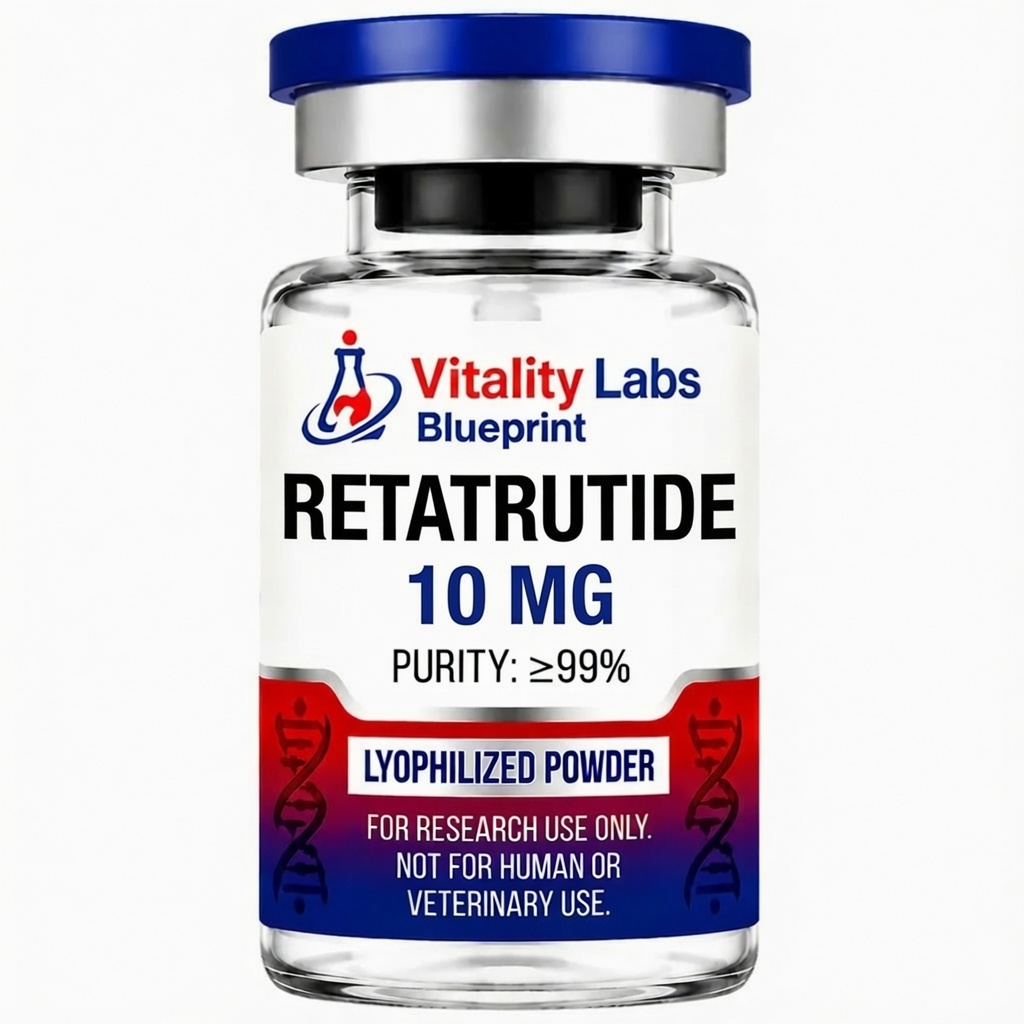
Retatrutide (10 mg Vial)

Retatrutide Research Information

Retatrutide is a compound discussed in scientific and educational resources. This information provides general background about its characteristics and research-related concepts.
Cagrilintide is a long‑acting acylated analogue of the pancreatic hormone amylin, designed for once‑weekly subcutaneous administration. It activates central amylin receptors to promote satiety, slow gastric emptying, and reduce food intake. In phase 2 and phase 3 trials, cagrilintide produced Research‑dependent weight loss with a predominantly gastrointestinal side‑effect profile.

Educational resources help readers understand scientific concepts and related terminology.

General Research Overview

This section provides organized information about scientific materials, their characteristics, and related educational topics.

PhaseWeeklyResearch Measurement DetailsVials Needed
Weeks 1–42 mg (2000 mcg)20 units (0.20 mL)1 vial
Weeks 5–84 mg (4000 mcg)40 units (0.40 mL)1 vial
Weeks 9–126 mg (6000 mcg)60 units (0.60 mL)1 vial
Weeks 13+8 mg (8000 mcg)80 units (0.80 mL)1 vial

Note: Information related to this compound is provided for general educational and research reference purposes only. Available details may vary depending on the material and documentation.

Preparation Information

Advanced Research Information

This section provides additional background information for readers interested in exploring more detailed scientific concepts and related topics.
PhaseWeeklyResearch Measurement DetailsVials Needed
Weeks 1–42 mg (2000 mcg)20 units (0.20 mL)1 vial
Weeks 5–84 mg (4000 mcg)40 units (0.40 mL)1 vial
Weeks 9–128 mg (8000 mcg)80 units (0.80 mL)1 vial
Weeks 13+12 mg (12000 mcg)120 units (1.20 mL)1 vial
Note: This information represents general educational background about the compound and related scientific discussions. Details may vary depending on available research information and documentation.
Important: This guide is provided for educational purposes only. It is intended to help readers understand scientific concepts and related information. The content does not represent professional guidance or individual recommendations.

General information related to educational resources and available documentation.

Concise summary of general educational information.

Suggested weekly educational overview based on available reference materials.

Proper storage preserves peptide integrity and potency.

Practical considerations for consistency and documentation.

Retatrutide is a compound discussed in scientific resources. This section provides general educational information about its characteristics and related scientific concepts. The available information explores how this compound interacts with biological systems and how researchers study its properties through scientific evaluation.

General observations from available educational references.

Complementary strategies for optimal outcomes.

General educational information about available resources and scientific concepts.

This content is provided for educational and research reference purposes only. The information presented here is intended to explain general scientific concepts and related topics. It does not represent individual recommendations or professional evaluation.

The following information provides general educational context related to scientific discussions and available background materials.

The Lancet (2023)

— Rosenstock J, et al. Retatrutide for type 2 diabetes: Phase 2 trial results (36-week study, HbA1c reductions, weight loss)

New England Journal of Medicine (2023)

— Jastreboff AM, et al. Triple-hormone-receptor agonist Retatrutide for obesity: Phase 2 trial (48-week study, up to 24% weight loss)

American Diabetes Association (2023)

— ADA Press Release: Novel agent Retatrutide results in substantial weight reduction (83rd Scientific Sessions, Phase 2 data)

ADA Meeting News (2023)

— Phase 2 trial results: benefits of Retatrutide in obesity, type 2 diabetes, NASH (83rd ADA Scientific Sessions coverage)

ClinicalTrials.gov

— Study of Retatrutide (LY3437943) in adults with obesity (NCT04881760; protocol details, Research regimens)

Current Obesity Reports (2025)

— Hamza M, et al. Triple agonism based therapies for obesity (review; titration strategies, GI side effect management)

Cell Metabolism (2022)

— Coskun T, et al. LY3437943 (Retatrutide): discovery to clinical proof of concept (triple GLP-1/GIP/glucagon agonist, preclinical mechanism)

Nature Reviews Endocrinology (2024)

— Multi-receptor agonists for metabolic disease (mechanism of GLP-1/GIP/glucagon co-activation)

Diabetes Care (2024)

— Incretin-based therapies: GLP-1, GIP, and glucagon receptor pharmacology (metabolic pathways, energy expenditure)

NEJM (2023) — Supplementary Material

— Jastreboff et al. obesity trial: cardiometabolic markers, liver fat reduction, lipid profiles

Hepatology (2024)

— Triple agonists in NAFLD/NASH: hepatic steatosis resolution (preclinical and clinical evidence)

The Lancet (2023) — Supplementary Data

— Rosenstock et al. diabetes trial: adverse event profiles, GI tolerability, titration schedules

CDC

— Vaccine administration: subcutaneous route (angle/site guidance; no aspiration required)

Johns Hopkins Arthritis Center

— How to give a subcutaneous Administration (technique, site rotation, sharps disposal)

GenScript Peptide Services

— Peptide storage and handling guidelines (lyophilized and reconstituted storage conditions, stability)

Journal of Pharmaceutical Sciences (2018)

— Stability of peptides during freeze-thaw cycles (best practices for aliquoting and storage)