
Chonluten has been studied in scientific research related to peptide mechanisms, cellular pathways, and biological processes. Research findings may vary depending on study design, methodology, and experimental conditions. This information is provided for research and educational purposes only.
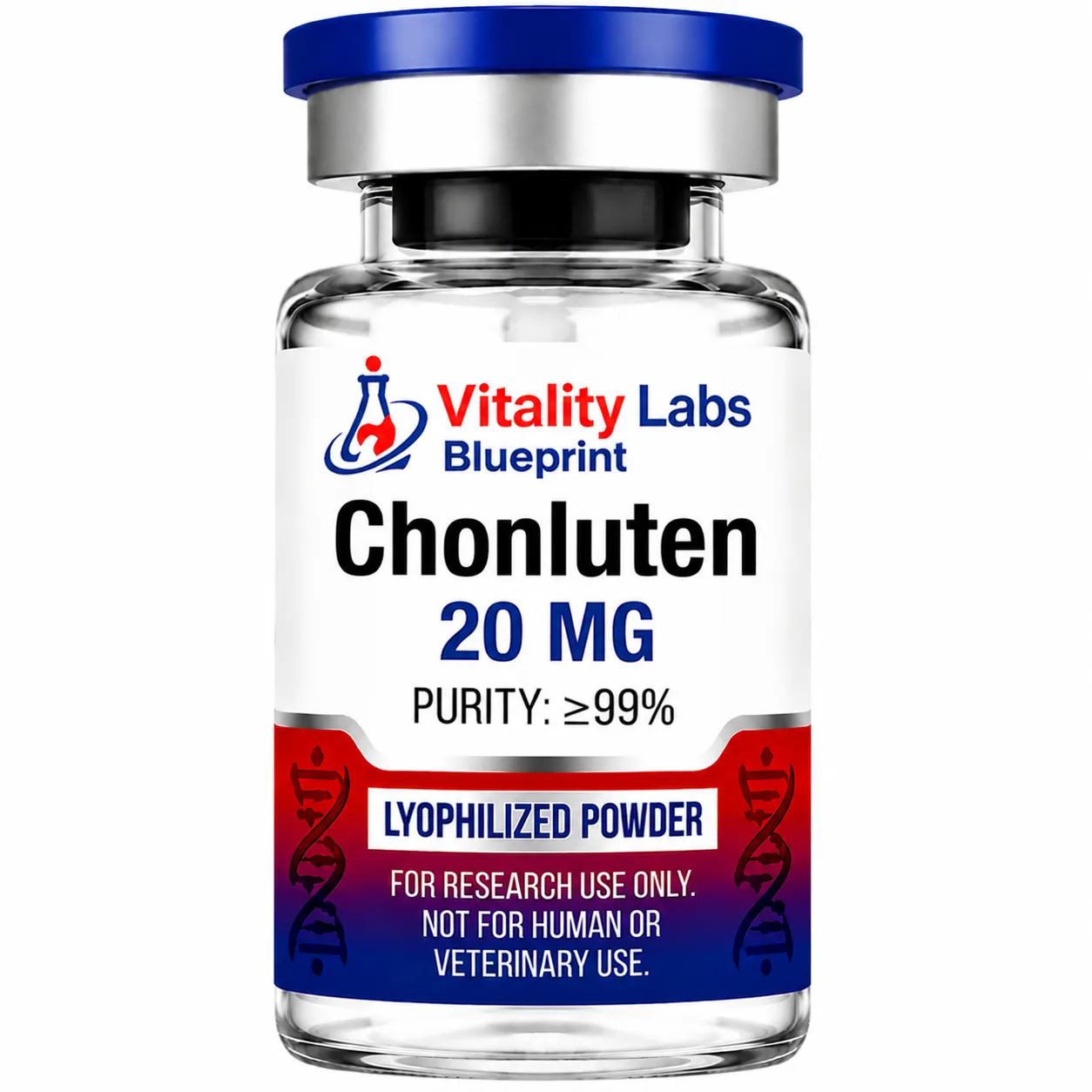
Chonluten is a short bioregulatory tripeptide (Glu-Asp-Gly) studied in scientific research related to cellular pathways, biological regulation, and peptide mechanisms. Research has explored its relationship with bronchopulmonary research models and inflammatory pathways.
Research findings may vary depending on study design, methodology, and experimental conditions. This information is provided for research and educational purposes only.
Educational guide for reconstitution and daily research
| Week/Phase | Daily Blend (mg) | Units (mL) |
|---|---|---|
| Weeks 1–2 | 250 mcg (0.25 mg) | 3.75 units (0.0375 mL) |
| Weeks 3–4 | 500 mcg (0.5 mg) | 7.5 units (0.075 mL) |
| Weeks 5–6 | 1,000 mcg (1 mg) | 15 units (0.15 mL) |
| Weeks 7–8 | 1,500 mcg (1.5 mg) | 22.5 units (0.225 mL) |
| Weeks 9–10 | 2,000 mcg (2 mg) | 30 units (0.30 mL) |
| Weeks 11–12 | 3,000 mcg (3 mg) | 45 units (0.45 mL) |
| Weeks 13–14 | 4,000 mcg (4 mg) | 60 units (0.60 mL) |
| Weeks 15–16 | 4,000 mcg (4 mg) | 60 units (0.60 mL) |
Research Information: Research methodologies and experimental parameters may vary depending on study design, scientific objectives, and laboratory requirements.
Reconstitution Steps
Important: This guide is for educational purposes only and is not medical advice. For research use only. Not for human consumption.
Chonluten (Glu‑Asp‑Gly) is a short bioregulatory peptide studied within the Khavinson peptide bioregulator framework targeting bronchopulmonary tissues. In vitro research using monocyte/macrophage (THP‑1) cell models indicates Chonluten may modulate proliferative activity and inflammatory pathways at concentrations in the nanomolar range. Short peptides such as Chonluten typically exhibit poor oral bioavailability due to enzymatic degradation and limited mucosal permeability, supporting subcutaneous administration as the preferred route.
General subcutaneous guidance from clinical best‑practice resources
— Scientific Research Reference: Subcutaneous Methods and Research Practices
— Scientific Research Reference: Laboratory Safety Practices and Research Methodology Guidelines
— Scientific Research Reference: Laboratory Preparation Methods and Research Practices
— Scientific Research Reference: Laboratory Procedures and Research Methodology
Explore related research protocols and background reading for Chonluten.