
Testagen has been studied in scientific research for its biological properties and molecular interactions. Published studies investigate its role under controlled laboratory conditions and research methodologies. This information is provided solely for scientific and educational purposes and does not include research, administration, preparation, or personal-use guidance.
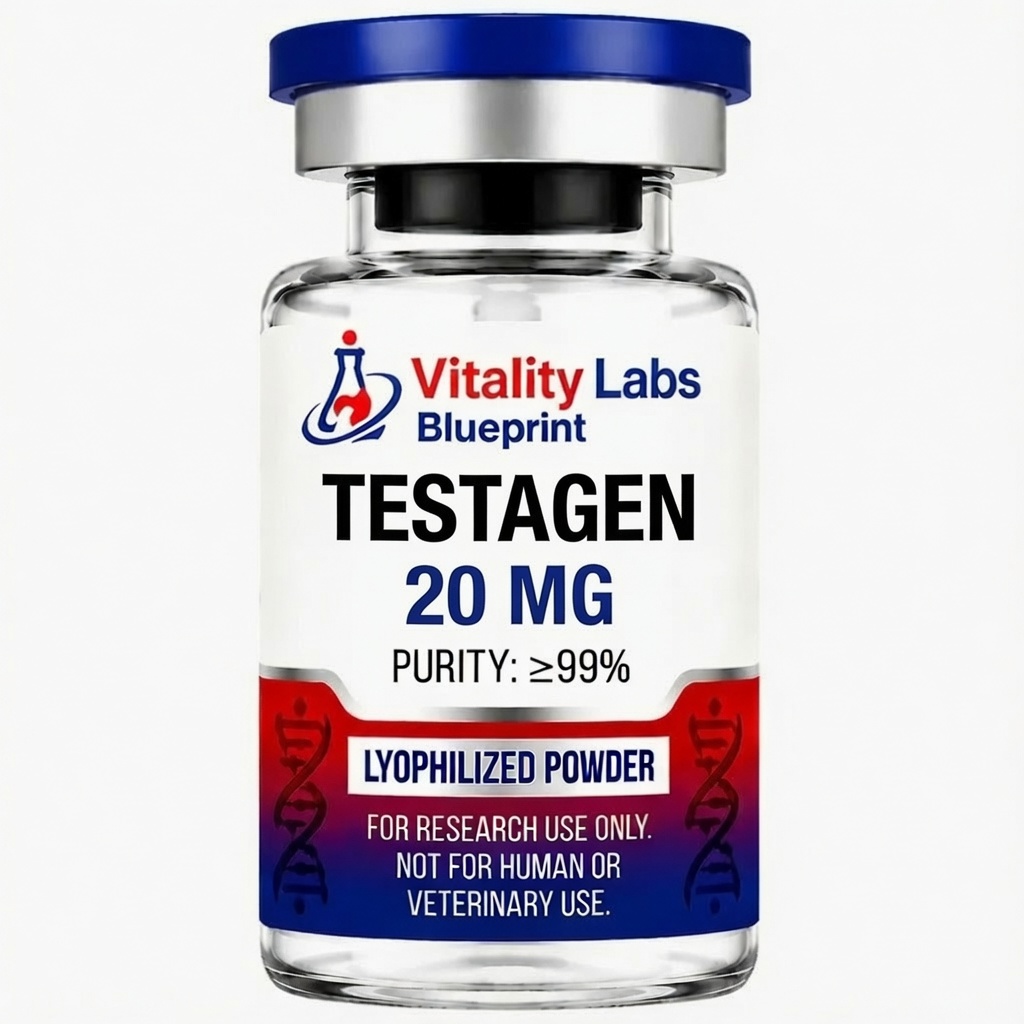
Testagen is a synthetic tetrapeptide with the sequence Lys‑Glu‑Asp‑Gly (KEDG), an anterior pituitary‑derived bioregulator studied for its role in modulating endocrine function, particularly the pituitary–gonadal axis. Preclinical research indicates effects on thyroid hormone normalization and male reproductive hormone modulation. This educational protocol presents a once‑daily subcutaneous approach using a practical dilution for clear insulin‑syringe measurements.
Research context: For evidence on mechanisms, human and preclinical research, limitations, and safety.
Educational guide for reconstitution and daily research
| Week | Daily Blend (mg) | Volume (mL) |
|---|---|---|
| Week 1 | 300 mcg (0.3 mg) | 18 units (0.18 mL) |
| Weeks 2–8 | 500 mcg (0.5 mg) | 30 units (0.30 mL) |
Frequency: Inject once daily subcutaneously, consistent with preclinical study protocols. For ≤10‑unit (≤0.10 mL) administrations, consider 30‑ or 50‑unit insulin syringes for improved readability.
Reconstitution Steps
Important: This guide is for educational purposes only and is not medical advice. For research use only. Not for human consumption.
Concise summary of the once-daily regimen.
Suggested daily titration approach.
Proper storage preserves peptide quality.
Practical considerations for consistency and safety.
Testagen (Lys‑Glu‑Asp‑Gly) belongs to a class of short bioregulatory peptides derived from anterior pituitary extracts. Preclinical research in avian models demonstrates that this tetrapeptide can normalize thyroid hormone levels in hypophysectomized subjects and modulate endocrine signaling along the pituitary–gonadal axis. These peptides are hypothesized to act through gene‑regulatory mechanisms influencing hormone synthesis and secretion. No human clinical trials exist; current understanding is extrapolated from preclinical and in vitro studies.
Observations from preclinical literature (no human trials available).
Complementary strategies for best outcomes.
General subcutaneous guidance from clinical best‑practice resources
This content is for educational purposes only and is not medical advice.
Explore related research protocols and background reading for BPC-157 + TB-500.
— Effects of Lys‑Glu‑Asp‑Gly peptide on hormonal activity and thyroid morphology in hypophysectomized mature and old birds
Explore related research topics and scientific background for Tesamorelin.