
Cerebrolysin has been studied in scientific research related to neurological pathways, cellular mechanisms, and biological processes. Research findings may vary depending on study design, methodology, and experimental conditions. This information is provided for research and educational purposes only.
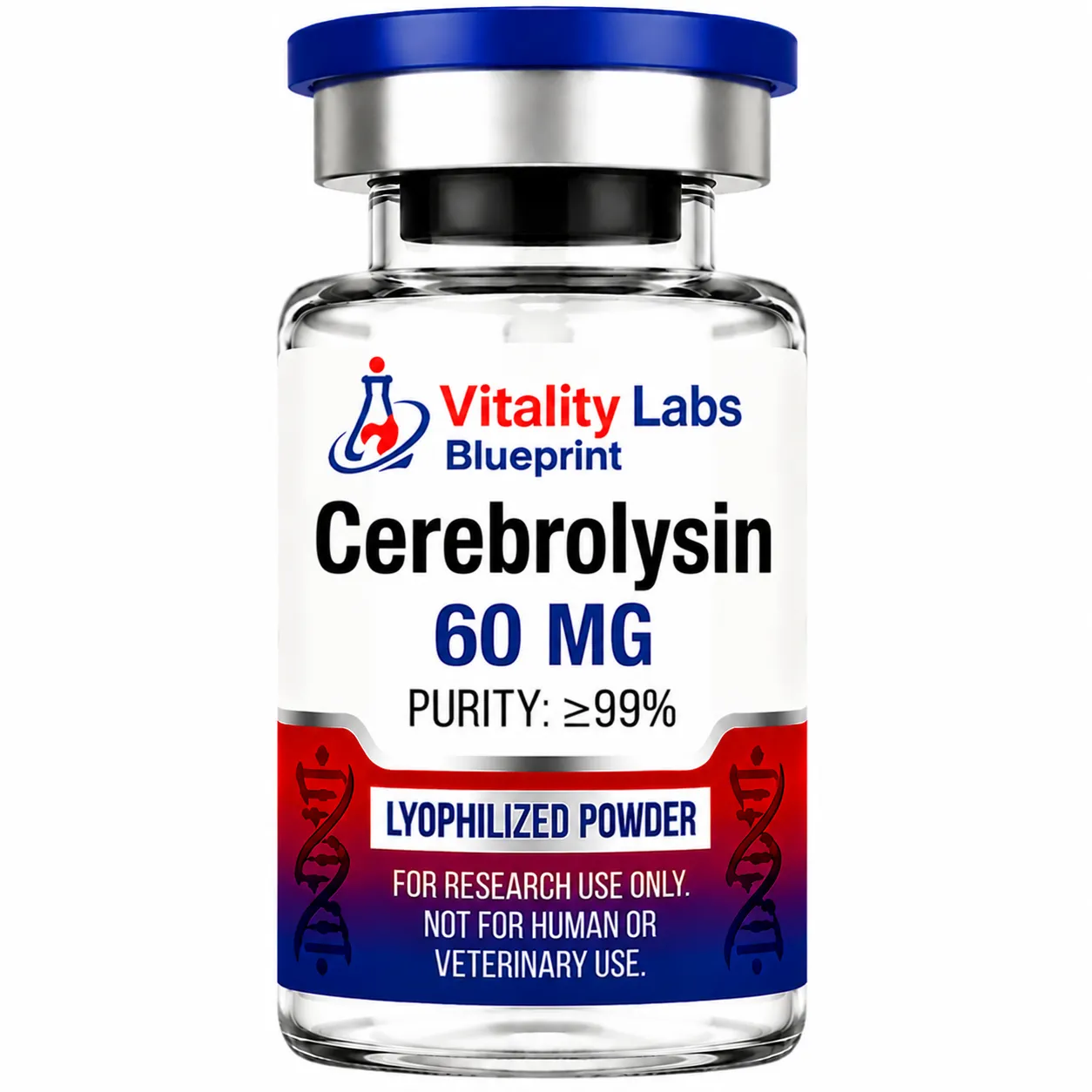
Cerebrolysin is a porcine brain‑derived peptide preparation containing low‑molecular‑weight neuropeptides and free amino acids that crosses the blood–brain barrier to support neuronal survival. It mimics endogenous neurotrophic factors (e.g., NGF, BDNF) and modulates neuroinflammatory mediators. This educational protocol presents a once‑daily subcutaneous approach using a practical dilution for clear insulin‑syringe measurements.
Educational guide for reconstitution and daily research
Research Information: Research methodologies and experimental parameters may vary depending on study design, scientific objectives, and laboratory requirements.
| Phase | Daily Blend (mg) | Volume (mL) |
|---|---|---|
| Weeks 1 | 20 mg (20,000 mcg) | 100 units (1.0 mL) × 1 |
| Weeks 2 | 24 mg (24,000 mcg) | 60 units (0.6 mL) AM + 60 units (0.6 mL) PM |
| Weeks 3 | 28 mg (28,000 mcg) | 70 units (0.7 mL) AM + 70 units (0.7 mL) PM |
| Weeks 4+ | 32 mg (32,000 mcg) | 80 units (0.8 mL) AM + 80 units (0.8 mL) PM |
Research Information: Research methodologies and experimental parameters may vary depending on study design, scientific objectives, and laboratory requirements. Research findings may differ across scientific investigations.
Reconstitution Steps
Important: This guide is for educational purposes only and is not medical advice. For research use only. Not for human consumption.
Research materials and study requirements may vary depending on experimental design, methodology, and laboratory needs.
Cerebrolysin is a multicomponent peptide preparation derived from porcine brain tissue, containing biologically active neuropeptides and amino acids with molecular weights below 10 kDa. This low molecular weight allows it to cross the blood–brain barrier and exert neurotrophic effects similar to endogenous factors like nerve growth factor (NGF) and brain‑derived neurotrophic factor (BDNF). Preclinical studies demonstrate neuroprotective effects including reduced infarct size and improved recovery in ischemia models. Human trials have examined its use in stroke, dementia, and traumatic brain injury with mixed but generally favorable tolerability profiles.
General subcutaneous guidance from clinical best‑practice resources.
— Scientific Research Reference: Laboratory Safety Practices and Research Methodology Guidelines
— Scientific Research Reference: Laboratory Preparation Methods and Research Practices
— Cerebrolysin Scientific Research Information and Background Reference (SPC 2016)
— Scientific Research Reference: Laboratory Procedures and Research Methodology
— Cerebrolysin (60 mg) Research Information and Scientific Background