
This Tesamorelin information is provided for general educational and research reference only. This page covers background information, scientific context, and research-related details for educational purposes.
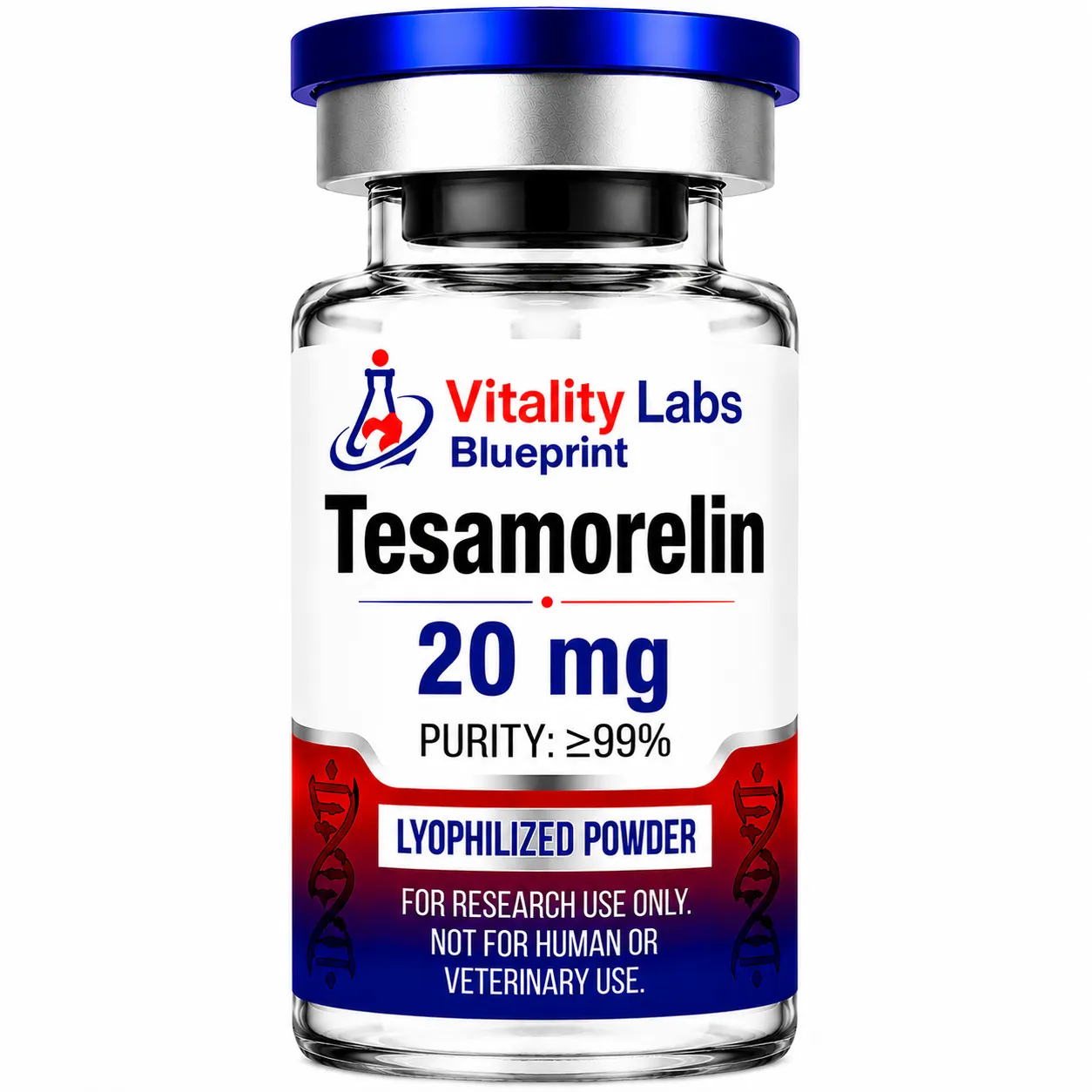
Research context: For evidence on mechanisms, human and preclinical research, limitations, and safety considerations, read Tesamorelin Peptide: Research Information Guide.
Educational guide covering research background, research information, and scientific context.
Route: Subcutaneous Research Methodology | Frequency: Once daily
| Week | Daily Blend (mcg) | Volume (mL) |
|---|---|---|
| Week 1 | 1 mg / 1000 mcg | 15 units (0.15 mL) |
| Weeks 2–12+ | 2 mg / 2000 mcg | 30 units (0.30 mL) |
Frequency: Research methodologies and study parameters vary depending on the objectives, laboratory conditions, and experimental design. This information is provided for scientific and educational purposes only and does not include research, administration, or treatment recommendations.
Reconstitution Steps
Important: This guide is for educational purposes only and is not medical advice.
Concise summary of the Tesamorelin research information.
Research information overview and scientific background.
Proper storage preserves peptide quality.
Practical considerations for consistency and safety.
Tesamorelin is a synthetic peptide analog related to growth hormone-releasing hormone (GHRH). It has been studied for its interaction with growth hormone pathways and its role in scientific research related to metabolism and biological processes. Research continues to explore Tesamorelin’s mechanisms, applications, and potential areas of study.
Observations from clinical research and scientific literature.
Complementary strategies for optimal outcomes.
General research handling and research information.
This content is provided for educational and research reference purposes only. It does not constitute medical advice, diagnosis, or treatment. Research information should be reviewed carefully, and any health-related decisions should be discussed with a qualified healthcare professional.
Explore related research protocols and background reading for BPC-157 + TB-500.
Explore the available research context, scientific information, and comparative references. When Research variants exist, they are presented separately based on their individual characteristics and specifications. Related compounds and blends are provided for informational comparison only and should not be considered interchangeable.