
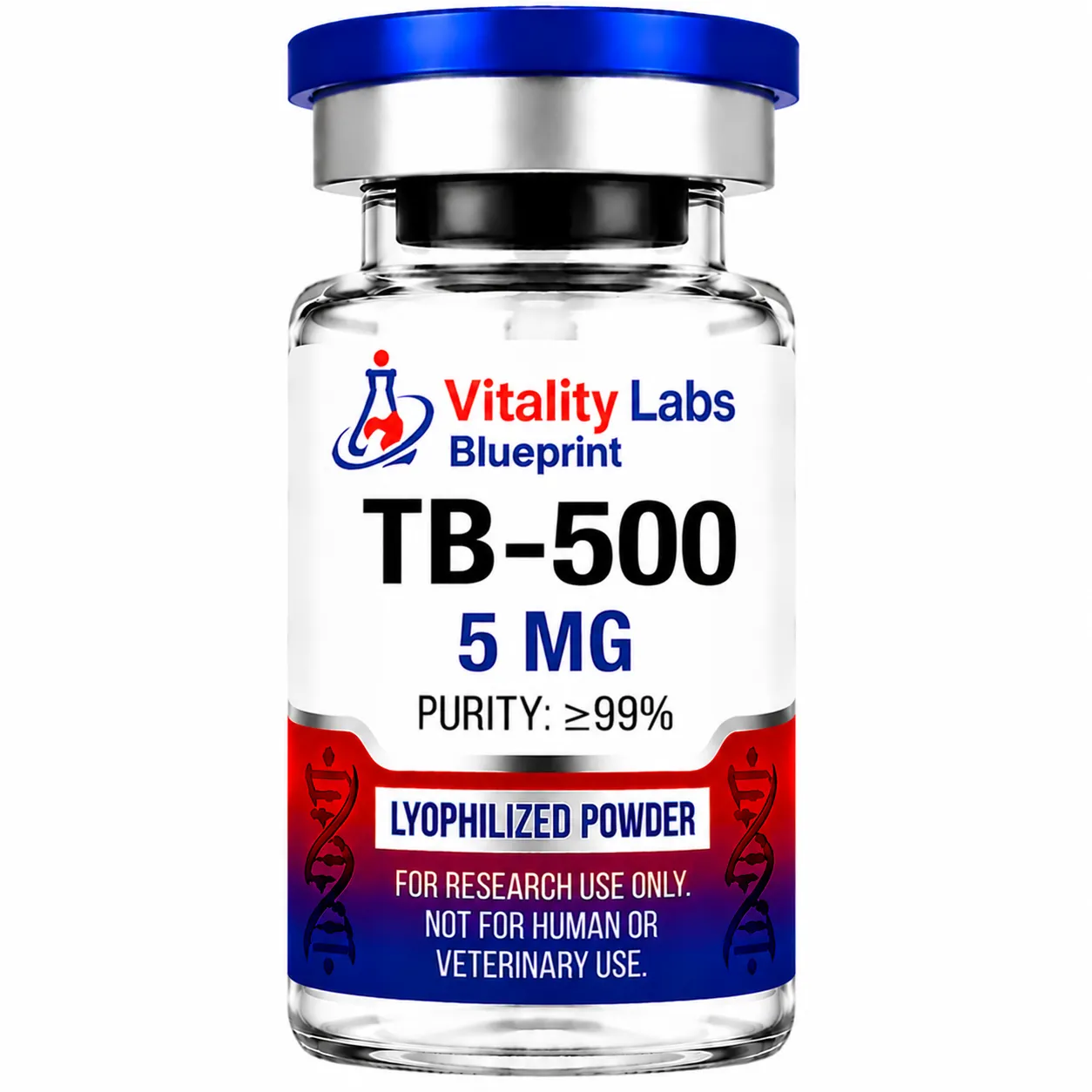
TB-500 has been studied in scientific research for its biological properties and potential mechanisms of action under controlled laboratory conditions. Research methodologies, study parameters, and experimental outcomes vary depending on the objectives and design of each investigation. This content is provided solely for scientific and educational purposes and does not include dosage, preparation, administration, or treatment guidance.
Educational guide for reconstitution and weekly research
| Phase | Daily Blend (mcg) | Volume (mL) |
|---|---|---|
| Weeks 1–2 | 500 mcg | 30 units (0.30 mL) |
| Weeks 3–4 | 600 mcg | 36 units (0.36 mL) |
| Weeks 5–8 | 750 mcg | 45 units (0.45 mL) |
| Weeks 9–12 | 1000 mcg | 60 units (0.60 mL) |
Frequency: Research methodologies, study parameters, and laboratory procedures vary depending on the objectives and design of each scientific investigation. This content is provided solely for scientific and educational purposes and does not include research schedules, preparation methods, measurement guidance, administration instructions, or treatment recommendations.
Reconstitution Steps
Important: This guide is for educational purposes only and is not medical advice. TB‑500 is not FDA‑approved for human use and is for research purposes only.
Plan based on an 8–16 week daily protocol with gradual titration.
Concise summary of the once-daily regimen.
Suggested daily titration approach.
Proper storage preserves peptide quality and activity.
Practical considerations for consistency and safety in research protocols.
Observations from preclinical and veterinary literature.
Complementary strategies for optimal outcomes.
— Best practices for subcutaneous Scientific Research Preparation Information (aseptic technique, site rotation)
— TB‑500 classification as prohibited substance in competitive sports
— Patient education guide for subcutaneous Scientific Research Methodology technique
Explore related research protocols and background reading for TB-500.