
Sermorelin (10 mg Vial)

Sermorelin Research Information

Sermorelin is administered at 200 mcg–500 mcg daily via subcutaneous administration in educational protocols. A 10 mg vial reconstituted with bacteriostatic water yields about 3.33 mg/mL. This information is for research and educational use only.
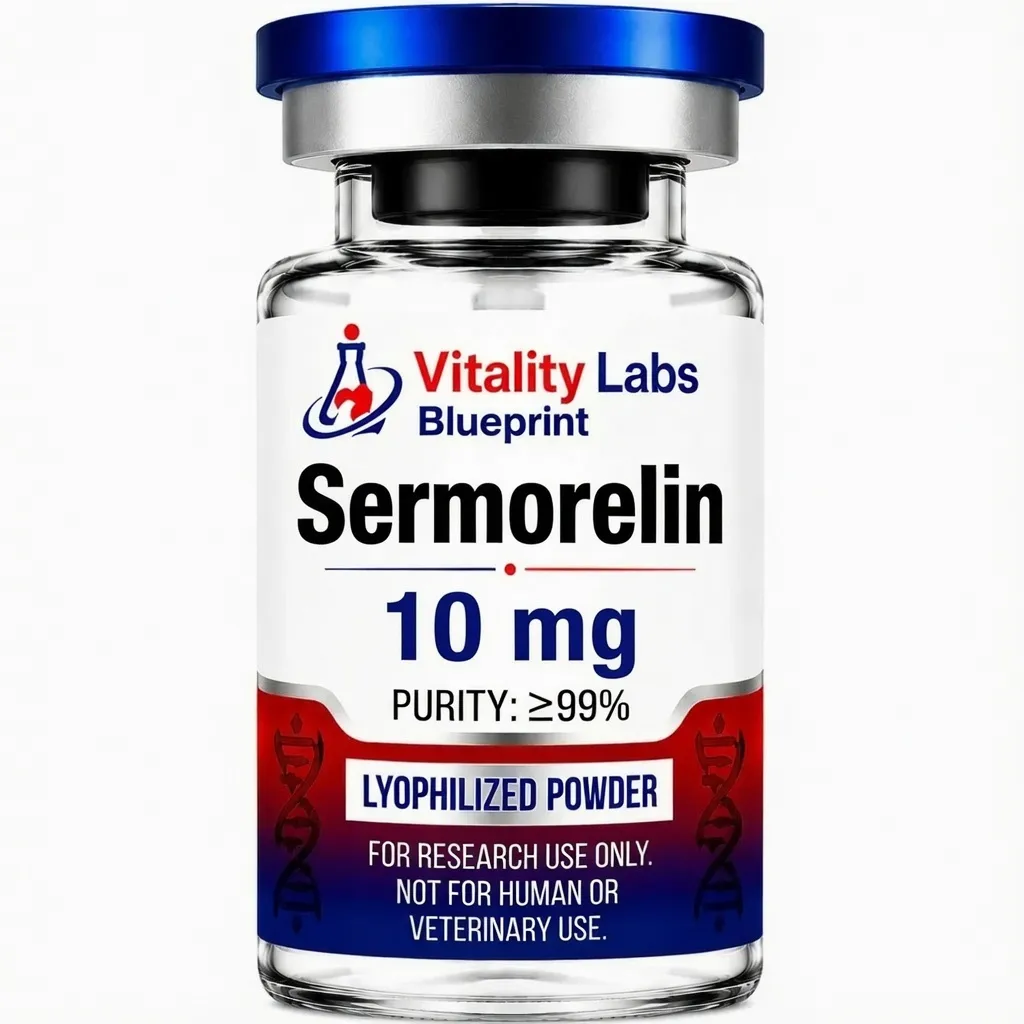
Sermorelin is a synthetic growth hormone–releasing hormone (GHRH) analog that stimulates endogenous pituitary GH secretion. Originally approved for pediatric growth hormone deficiency, it is studied for adult off-label use to support physiologic GH output and IGF-1 levels. This educational protocol presents a once-daily subcutaneous approach administered at bedtime to align with natural nocturnal GH release.

Research context: For evidence on mechanisms, human and preclinical research, limitations, and safety, read Sermorelin Peptide: Benefits, Uses, Side Effects, and Research.

Educational guide for reconstitution and nightly administration.

Standard / Gradual Approach (3 mL = ~3.33 mg/mL)

WeekDaily AnountOld UnitsNew Units
Weeks 1–2200 µg12 units (0.12 mL)6 units (0.06 mL)
Weeks 3–4300 µg18 units (0.18 mL)9 units (0.09 mL)
Weeks 5–6400 µg24 units (0.24 mL)12 units (0.12 mL)
Weeks 7–8500 µg30 units (0.30 mL)15 units (0.15 mL)

Frequency: This schedule uses the largest practical dilution (3.0 mL) to keep per  units measurable with standard measuring devices.

Reconstitution Steps

Important: This guide is for educational purposes only and is not medical advice. For research use only. Not for human consumption.

Plan based on an 8-week daily protocol with gradual titration (56 administrations total).

Concise summary of the once-daily nightly regimen.

Suggested nightly titration approach for adult off-label use.

Proper storage preserves peptide potency and sterility.

Practical considerations for consistency, safety, and optimal response.

Sermorelin is a synthetic analog of growth hormone–releasing hormone (GHRH) that binds to GHRH receptors on pituitary somatotropes, stimulating endogenous pulsatile GH secretion. Unlike exogenous GH administration, sermorelin preserves physiologic feedback loops through somatostatin and IGF-1, helping regulate GH output naturally. This pulsatile GH release promotes hepatic and peripheral IGF-1 production, supporting protein synthesis, lipolysis, and tissue repair. Pediatric studies demonstrated improvements in growth velocity over 6–12 months, while adult research focuses on supporting physiologic GH production in individuals with age-related declines. Sermorelin requires a functional pituitary gland to be effective.
Observations from pediatric clinical trials and adult off-label research.
Complementary strategies to optimize GH response and overall outcomes.

General subcutaneous guidance from clinical best-practice resources.

This content is intended for educational and research reference purposes only and does not constitute medical advice, diagnosis, or treatment. Sermorelin is for research use only. Individual responses may vary, and information should be interpreted within the context of current scientific literature. This material is not intended to replace professional medical guidance.

The following information provides general educational context related to scientific discussions and available background materials.

PubMed

— Prakash & Goa (1999): Sermorelin: a review of its use in the diagnosis and treatment of children with idiopathic growth hormone deficiency (pediatric GHD; 30 µg/kg SC nightly; 6–12 month trials)

RxList

— Sermorelin Acetate Clinical Monograph: adult research information, reconstitution, storage, and administration guidance

PubMed

— Clinical studies: bedtime SC administration aligns with the natural nocturnal GH pulse; once-daily nightly administration showed significant growth improvements in pediatric GHD over 6–12 months

Mayo Clinic

— Sermorelin – Proper Use and Storage: refrigerate reconstituted solution at 2–8 °C (36–46 °F); do not freeze; use within the recommended period

RxList

— Sermorelin Acetate Prescribing Information: adverse effects (application-site reactions ~17%; rare headache/flushing <1%); subclinical hypothyroidism ~6.5%; thyroid monitoring recommended

PubMed

— Sermorelin mechanism: stimulates endogenous pulsatile GH via GHRH receptors; preserves physiologic feedback loops (somatostatin/IGF-1 negative feedback); reduces risk compared with exogenous GH

Johns Hopkins Arthritis Center

— Subcutaneous Administration Guide: site selection (abdomen/thigh/arm); rotation guidance; 45–90° angle; pinch technique; no aspiration; safe disposal practices

CDC

— Vaccine administration: subcutaneous administration technique (45–90° angle; site preparation; no aspiration for SC administration)

PubMed

— Sermorelin research considerations: higher amounts (up to 500 µg daily) used in research for greater IGF-1 response in adults; aging and obesity associated with reduced GH release; cautious titration recommended

RxList

— Sermorelin treatment duration: pediatric studies 6–12 months of daily therapy with sustained effect; some continued up to 36 months; adult research cycles typically 3–6 months to evaluate response

NCBI Bookshelf

— Best practices for parenteral administration: aseptic technique, preparation, and administration guidance

RxList

— Sermorelin safety profile: no serious acromegaly or hypoglycaemia at recommended amounts; built-in negative feedback helps prevent excessive GH/IGF-1; FDA-approved (as Geref) with an established safety record