
KPV is studied at 200 mcg–500 mcg daily in educational research settings, often used in short anti-inflammatory studies. A 10 mg vial prepared with bacteriostatic water yields about 3.33 mg/mL. This information is for research and educational use only.
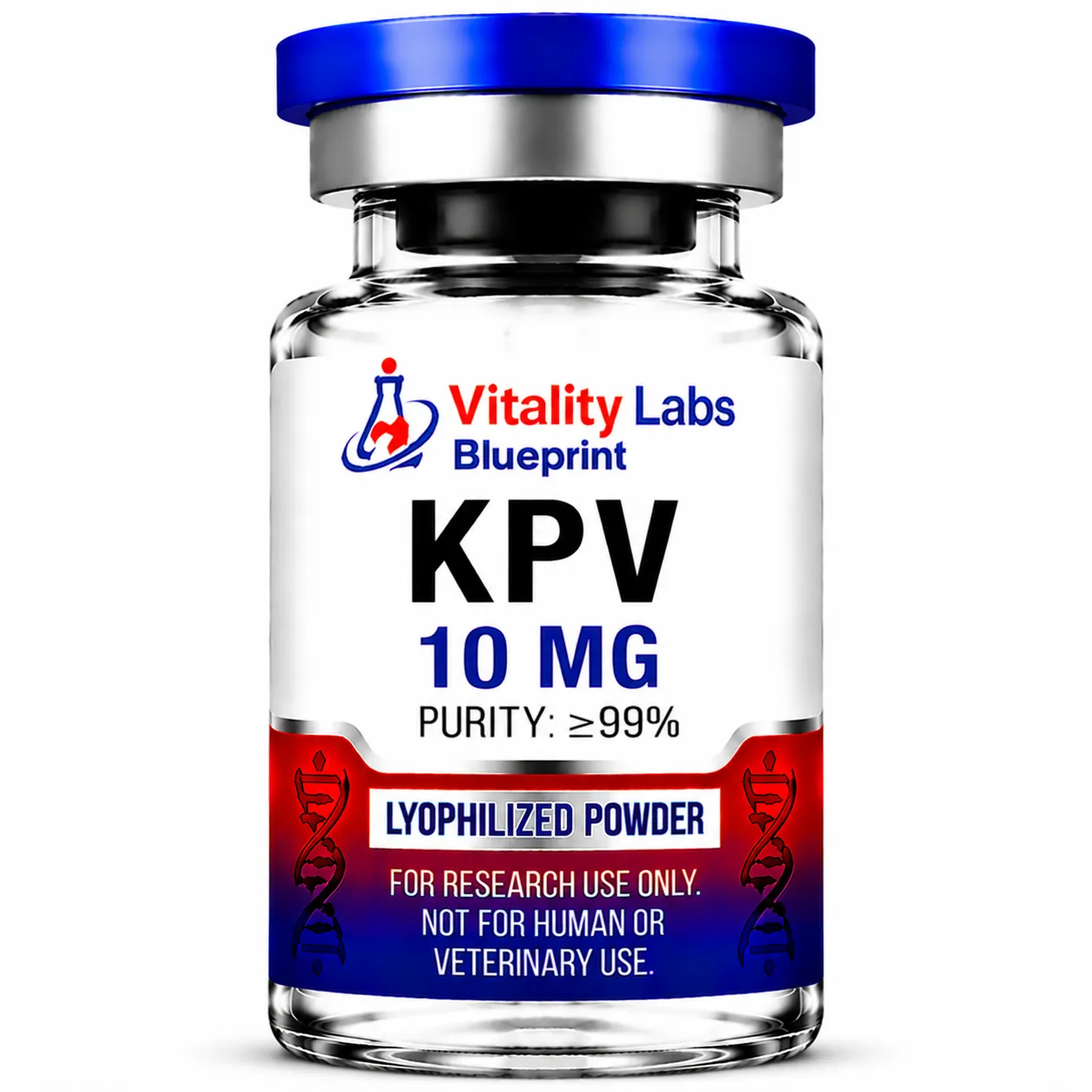
KPV (Lysine–Proline–Valine) is a C-terminal tripeptide fragment of α-melanocyte-stimulating hormone (α-MSH) studied for its potential anti-inflammatory properties without melanotropic side effects. Research demonstrates KPV reduces pro-inflammatory cytokines in models of inflammatory bowel disease and systemic inflammation. This educational material presents a once-daily subcutaneous approach using a practical dilution for precise measurements.
Educational guide for preparation and daily research use
| Week | Daily Amount | Units (per administration) |
|---|---|---|
| Week 1 | 200 mcg | 6 units (0.06 mL) |
| Week 2 | 300 mcg | 9 units (0.09 mL) |
| Week 3 | 400 mcg | 12 units (0.12 mL) |
| Weeks 4–8 | 500 mcg | 15 units (0.15 mL) |
Preparation Steps
Plan based on an 8–16 week daily research schedule with gradual progression.
Concise summary of the once‑weekly regimen.
Suggested daily progression approach.
Proper storage preserves peptide quality and stability.
Practical considerations for consistency and safety.
Observations from preclinical and early-stage research.
Complementary strategies for optimizing inflammatory balance.
General subcutaneous guidance from clinical best-practice resources.
— Pawar K. et al: KPV as an α-MSH fragment retains potent anti-inflammatory activity without melanotropic side effects
— Brozska T. et al: α-MSH and related tripeptides: modulation of colitis, inflammation, and melanocortin receptors
— Dalmaso G. et al: PepT1-mediated tripeptide KPV uptake reduces intestinal inflammation in DSS colitis models
— KPV peptide benefits, safety, and administration routes; subcutaneous application for systemic research
— KPV measurement reference and research guidance: 200–400 mcg subcutaneously once daily for inflammation and wound healing
— Long-term peptide stability best achieved in lyophilized form at ≤ −15 °C; avoid extended storage in solution
— Lyophilized peptides stable for short-term at 4 °C, long-term at −20 °C; prepared solutions refrigerated up to ~30 days
— Subcutaneous technique guidance: site preparation, needle angle (45–90°), and site rotation